
EUH 3122 – Weekly Topics
Week 1 (August 20-21): Introduction. How high can the Middle Ages go? [Raffensperger/Curta 245-253, 494-505]
- Chronological framework: early, high, and late Middle Ages; how to use primary sources [Andrea xli-lii]; see also How to Read a Primary Source
- The (known) world after Y1K; see Ralph Glaber, Miracles of Saint Benoit and the on-line map

Week 2 (August 24-28): Agriculture and rural society [Raffensperger/Curta 254-269]
- Medieval manor: lords and peasants [Andrea 204-213; Atlas 47-48]; see also a description of the Hecham manor (1086), a collection of texts on manorial management and organization (ca. 1275), tables on population in medieval Europe, and the presentation of the archaeological site at Wharram Percy
- Social orders and “feudalism” [Andrea 137-147, 214-219]; see also the introductory essay on feudalism, the agreement between Count William V of Aquitaine and Hugh IV of Lusignan, and a twelfth-century charter of homage and fealty
Week 3 (August 31-September 4): The revival of commerce [Raffensperger/Curta 270-276]
- Markets and fairs; see also the grant of market to the bishopric of Osnabruck (952); Heimskringla on fairs, a grant of two fairs at Duisburg (1173), and Humbert de Romans on markets and fairs.
- Long-distance trade and the “commercial revolution” [Atlas 61-62 and 129-132]; see also Innocent III’s license to Venice for trade with the Muslims (1198), privileges granted to Hansa merchants at Novgorod (1229), Lübeck and Hamburg treaty (1241), a purchase of shares in a ship (1248), a partnership contract (1248), and an example of purchase on credit (1248)
Week 4 (September 7-11): Urban economy and freedom [Raffensperger/Curta 277-290]
Monday, September 7: Labor Day (no classes)
- Medieval cities, urban economy, and guilds [Andrea 223-237 (rules of the Southampton guild of merchants, John of Viterbo, Jews of Speyer); Atlas 151-154, 156-157, and 255-257]; the law of the fullers and weavers of Winchester (1209), the law revision of the garment cutters’ guild of Stendal (1231), the charter of the shearers of Arras (1236) and Medieval English Towns
- Urban communities and communes [Andrea 220-223]; see also the suppression of the Etampes commune by Philip II Augustus (1199-1200) , an account of the setting up of self-government in Ipswich (1200), and Guibert of Nogent on the commune of Laon (1115)
Week 5 (September 14-18): West European Christianity in the High Middle Ages [Raffensperger/Curta 370-377]
- The power of the Church: conversion to Christianity and the organization of parish communities; see three documents on medieval sacraments, Caesarius of Heisterbach on eucharist as a charm (1220-1235), the cathedral chapter of Chartres and the riot of 1210
- Popular religion and heresy [Andrea 186-191 and 200-203 (Peter Waldo, pseudo-David of Augsburg); Atlas 178-180]; see also sermon tales of the Virgin, relics, and devil; Raynaldus on the Cathars, Bernard of Gui’s description of the Cathars, the confession of Agnes Francou, and the Cathar Gospel
Week 6 (September 21-25): Monasticism and the reform of the Church [Raffensperger/Curta 327-333, 378-383]
- Monasticism and the friars [Andrea 191-194 (Francis’s testament); Atlas 167-169]; see also the foundation charter of Cluny (910); William of St. Thierry’s description of Clairvaux (1143)
- Medieval papacy and Inquisition [Andrea 194-200 (canons of Lateran IV); Atlas 174-175 and 268-269]; see also Innocent III’s letters, Bernard of Gui’s description of inquisitorial techniques, and Angelo Clareno on inquisitorial torture
Week 7 (September 28-October 2): Crusades and crusaders [Raffensperger/Curta 316-326, 340-349, and 362-369]
- The first three crusades [Andrea 304-318 (Fulk of Chartres, Robert the Monk, Solomon Bar Simson, Usamah bin Munqidh); Atlas 109-119]; see also Odo of Deuil on King Louis VII and the Second Crusade, and the Itinerarium Peregrinorum et Gesta Regis Ricardi on Richard the Lionheart’s peace with Saladin (1192)
- The Fourth Crusade; see Geoffroy de Villehardouin and Nicetas Choniates; see also Chronica Regiae Coloniensis on the Children’s Crusade
- Crusader states; see also William of Tyre on Godfrey of Bouillon as King of Jerusalem, Fulk of Chartres on Latins in the East
- October 2: Homecoming (no classes)
Week 8 (October 5-9): Western Christendom and the wider world [Raffensperger/Curta 390-396 and 447-455]
- Midterm exam: Monday, October 5, 11:45 to 12:35
- Christians, Muslims, and Mongols [Andrea 335-348 (Joinville, John of Monte Corvino); Atlas 129-131]; see also Marco Polo on the Tartars
Week 9 (October 12-16): The world of thought and art [Raffensperger/Curta 399-422]
- From cathedral schools to the twelfth-century Renaissance [Andrea 241-243 (Peter Abelard); Atlas 182-183]; see also Guibert of Nogent’s Autobiography , Roger Bacon on experimental science, and Heloise’s letter to Abelard
- Western medieval art [Andrea 258-265]
Week 10 (October 19-23): The community of the realm [Raffensperger/Curta 291-307, 334-339, 350-361, and 384-389]
- Political centralization and the history of the European monarchies
- France [Andrea 284-288, 359-363, 411-415 (Joinville, Catherine of Sienna about Avignon, Philippe de Commynes on Louis XI); Atlas 36-39, 103-105, and 131-133]; see also Richer on Hugh Capet’s election
Week 11 (October 26-30): Centralization and war [Raffensperger/Curta 478-486]
- England [Andrea 292-296, 298-301 (Magna Carta, Edward’s Summons to Parliament); Atlas 220-221 and 241-243]
- The Hundred Years War [Andrea 366-373, 402-410 (Froissart, Christine of Pisan on Joan, Johann Nider on Joan); Atlas 1201-204 and 231-234]
Week 12 (November 2-6): On the fringes [Raffensperger/Curta 334-339, 436-446, and 462-477]
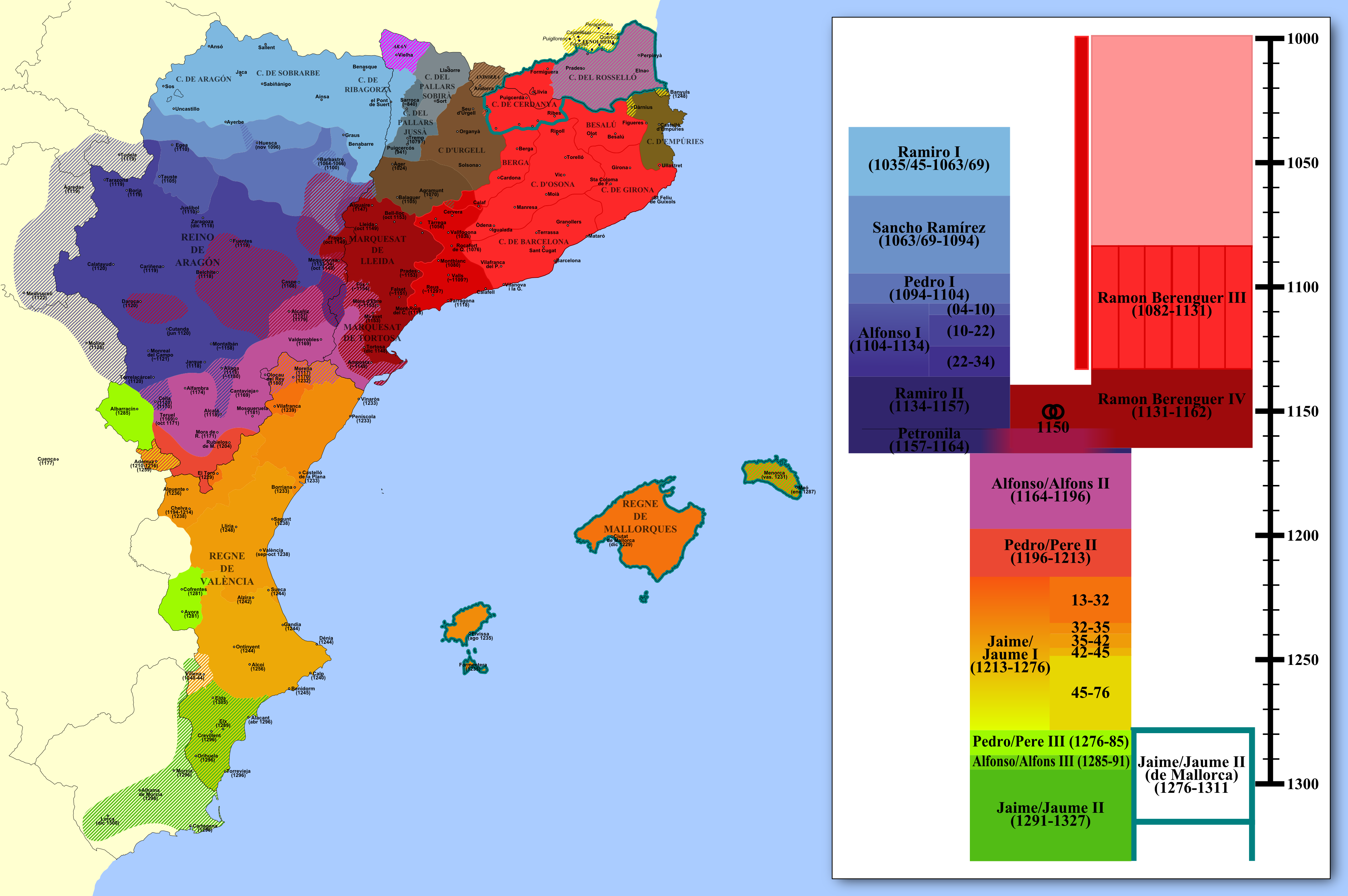
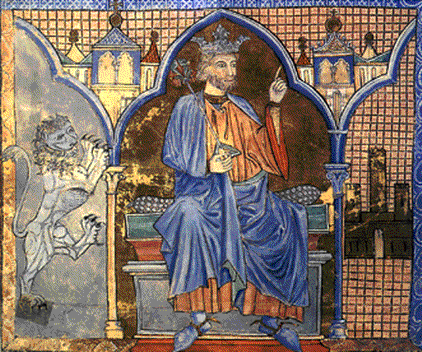
- The Iberian kingdoms and Reconquista [Andrea 289-291 (ordinances); Atlas 42-44, 133-135, 224-226, and 240-241]; see maps of the taifa kingdoms, of the Almoravid and Almohad Empires, of the Iberian Peninsula in the late twelfth and thirteenth centuries, of the kingdom of Aragon, and of the kingdom of Granada; see a portrait of Ferdinand III of Castile
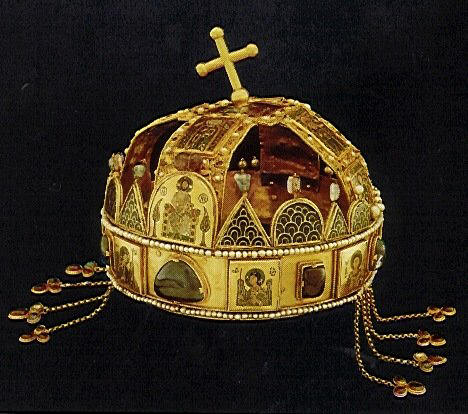
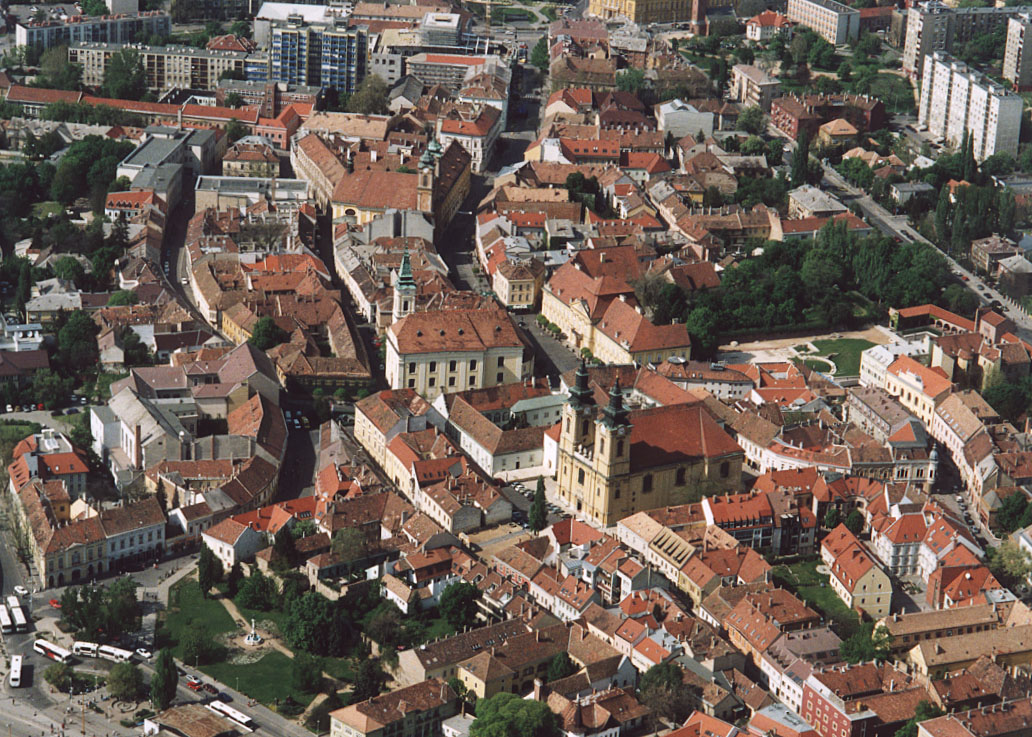
- East Central Europe and Scandinavia in the High Middle Ages; see maps of Hungary in the late eleventh-century and the royal crown and a portrait of King Ladislas I; visit Esztergom and Székesfehérvár




Week 13 (November 9-13): Monarchs and popes in conflict [Raffensperger/Curta 423-435]
- The Empire [Andrea 267-271 and 296-298; Atlas 29-31, 95-97, 123-125, 212-213, and 214-216]; see also the Golden Bull of Charles IV
- Wednesday, November 11: Veteran’s Day (no classes)
- Italian city-states: ideals and reality [Andrea 415-420]; see also Giovanni Vilanni, Chronicle of Florence
Week 14 (November 16-20): Crisis and expansion in the late Middle Ages [Raffensperger/Curta 456-461 and 487-494]
- Crisis and expansion [Andrea 351-359, 390-392, 421-424; Atlas 244-246, 260-261, 276-277, and 289-291]; see also Petrarch’s letter to posterity
- Late medieval Church and lay religiosity [Andrea 359-365]
- Great Schism [Andrea 395-398]
Week 15 (December 1-2): New horizons [Raffensperger/Curta 495-506]
- Early Renaissance
Final exam: Wednesday, December 9, 3:00 to 5:00